Staunton, Virginia
Woodrow Wilson Presidential Library & Museum: A Car, a Trench, and a Garden With a Story
A family visit to Staunton's presidential museum, where the most memorable history was sometimes right in front of us—and sometimes under our feet
Quick Facts
- Best for
- History enthusiasts, families with children who can manage no-touch galleries, and visitors building a Staunton day
- Admission
- Currently $20 per adult; children 5 and under free. For our two adults and three-year-old, that works out to $40 at listed rates, before possible fees. Our exact transaction was not retained.
- Included
- Self-guided museum and a scheduled guided tour of the birthplace, the Manse
- Our visit
- Museum, garden, shop, and birthplace exterior; we did not take the guided house tour
- Parking
- Easy for us in the signed visitor area
- Restrooms
- Clean and easy to find near the start of the museum route
- Sensory note
- The World War I trench recreation uses sound and floor vibrations; some children may find it frightening
The Road So Far
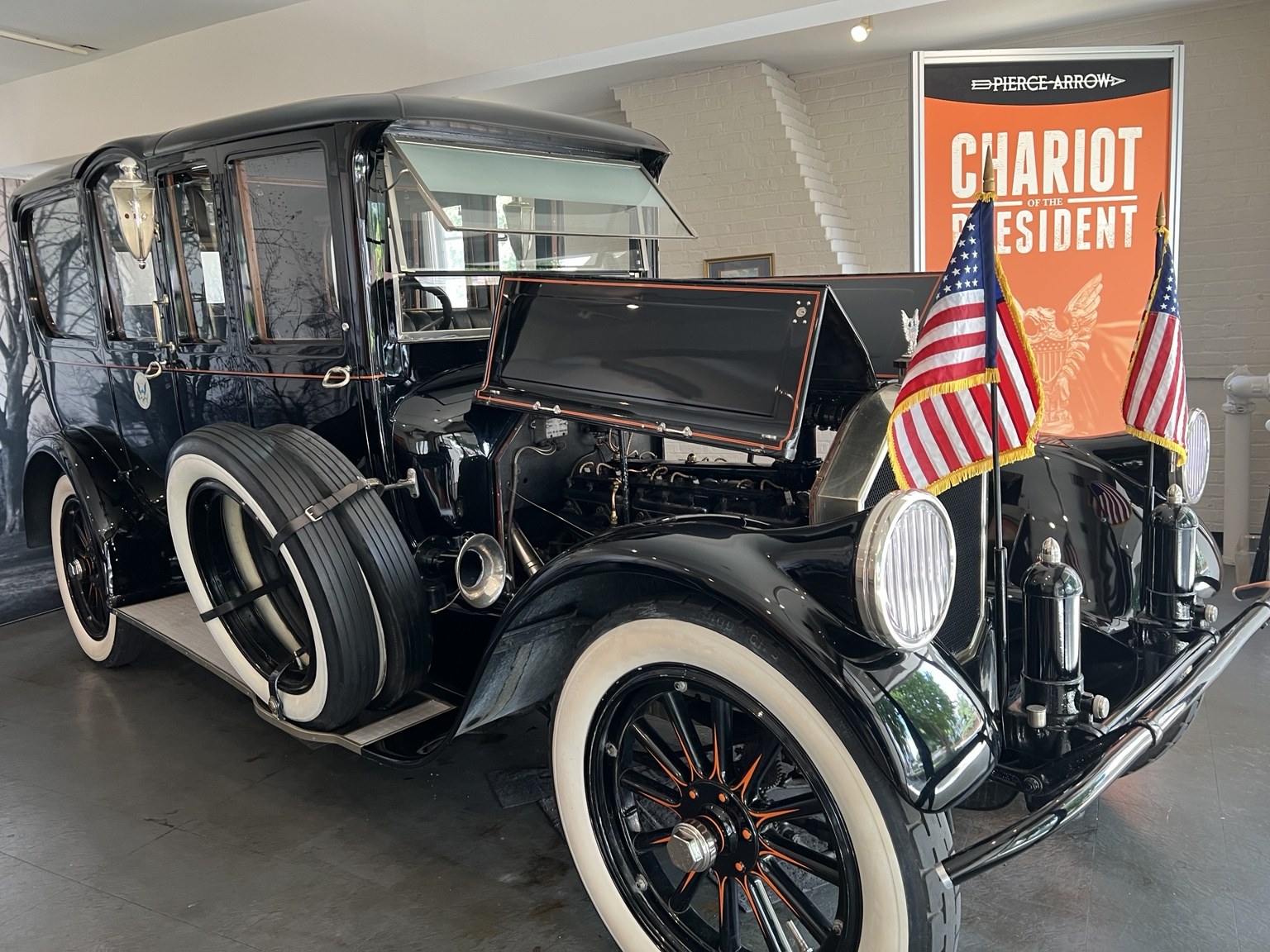
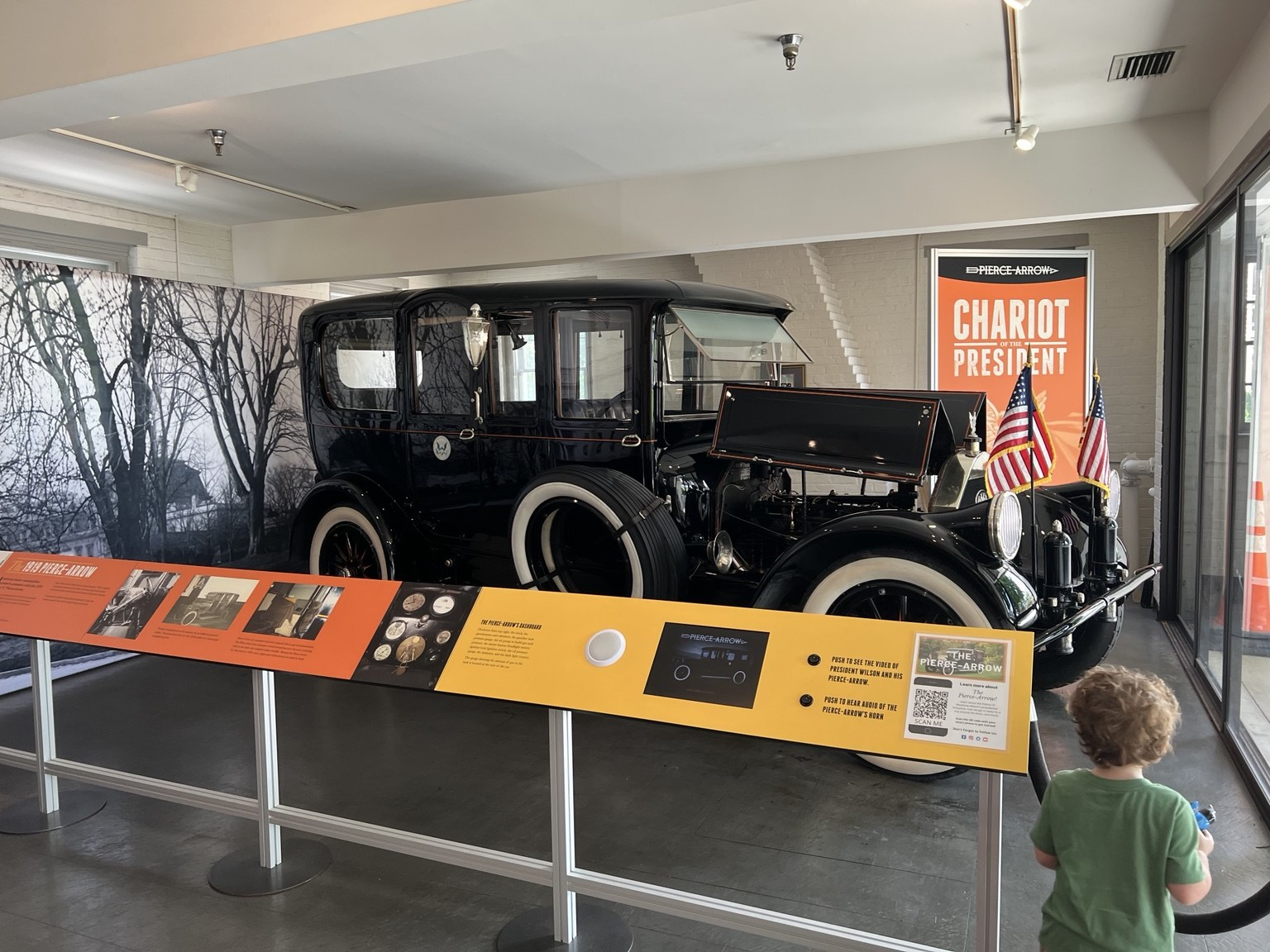
You can see Woodrow Wilson's presidential car before you are close enough to read its label. The Pierce-Arrow sits behind glass, visible from outside the museum. It is an excellent invitation to come in—and getting close to it is considerably better than peering through the window.
Our Wayward crew came for a family museum visit, with the Littlest Wayfinder at an age when an intriguing object usually calls for closer inspection by hand. That made the self-guided galleries a somewhat brisk undertaking. Even at our speed, the car, the World War I trench recreation, and a special exhibition of women's clothing gave us plenty to talk about. The garden and gift shop extended the visit beyond the museum walls.
The Presidential Pierce-Arrow
The car was the star of the museum for us. The exhibit identifies it as a 1919 Pierce-Arrow, and its glass-walled display makes it visible to passersby. From outside, it is impressive. Up close, you get the scale and detail that the distant view cannot supply.
For a young visitor, a car is also an immediate point of connection in a building full of history that otherwise asks for a good deal of reading and restraint. We lingered here more readily than in galleries where the Littlest Wayfinder wanted to touch things that very much did not want to be touched.
A Trench You Can Feel
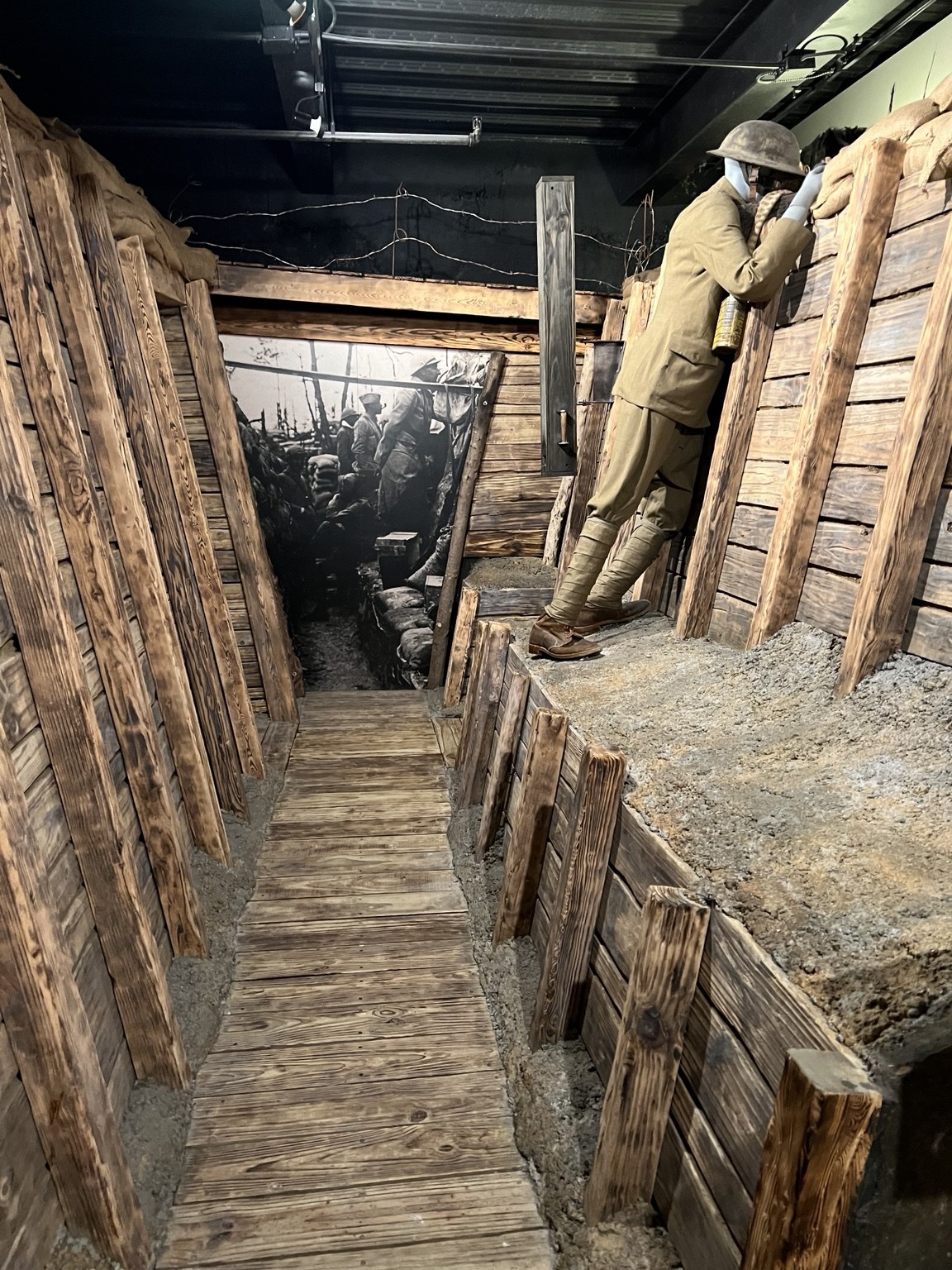
In the basement, the museum recreates a World War I trench with sound and vibrations underfoot. The physical effects make this more immersive than a row of photographs or a case of artifacts. The exhibit also carries a warning about war-front images and sound recordings.
The Littlest Wayfinder took it in stride. A child who understands more of what the trench represents might react quite differently. For me, the sensory experience made the sacrifices behind the history harder to hold at a comfortable distance. Parents should know what is coming, particularly if their child is sensitive to sudden sound, darkness, or vibration.
Remember the Ladies
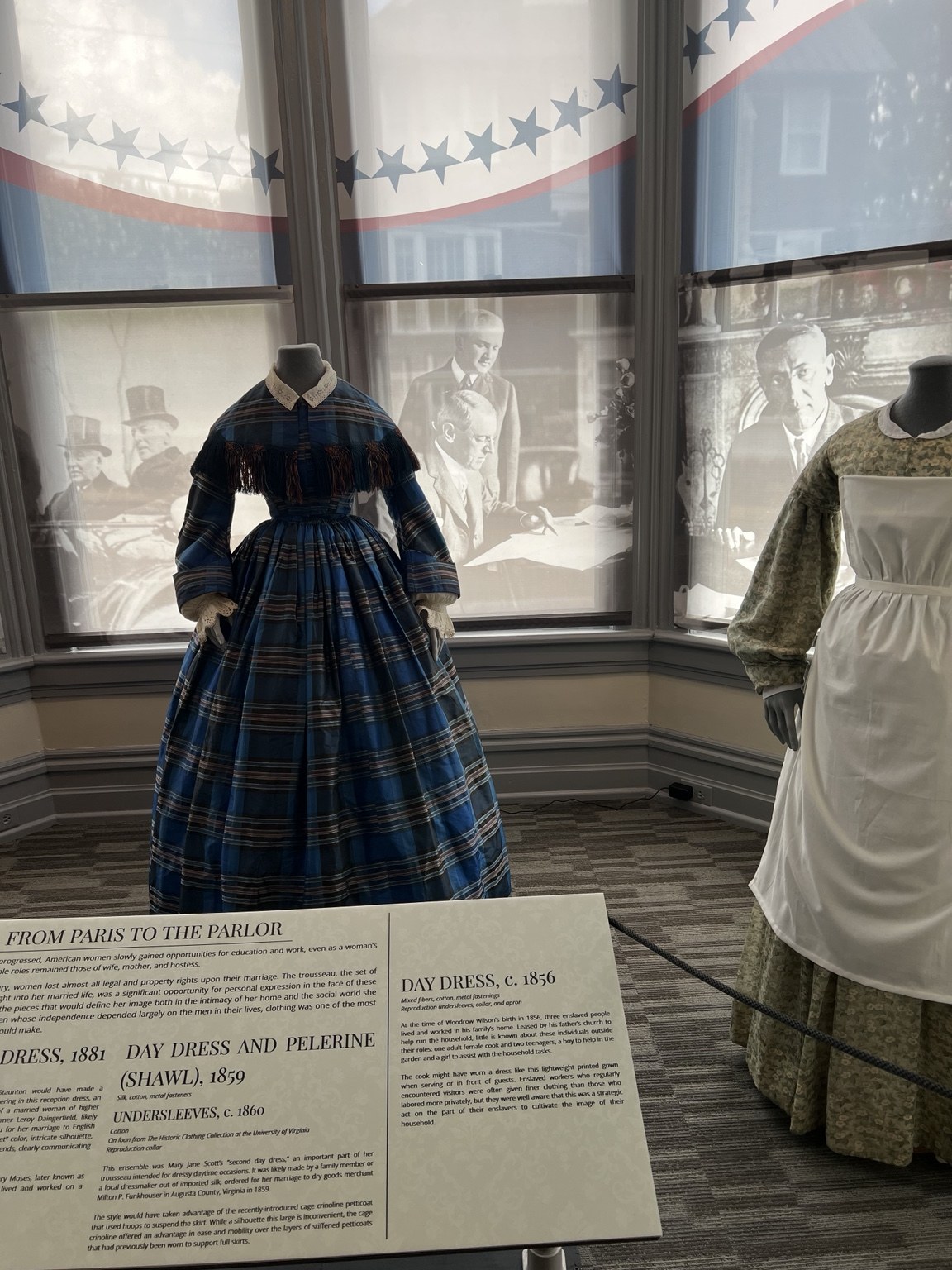
Remember the Ladies: Fashion, Freedom, and the Fabric of a Nation, 1776–2026 was another stop that held my attention. Created for the nation's 250th anniversary commemoration, the exhibition uses women's garments and personal objects to tell stories across American history.
The clothing is interesting in its own right, but the stronger idea is that a garment can say something about the woman who wore it and the world she lived in. We did not study every piece for as long as I might have without a small companion eager to move along. It is a reason I would enjoy revisiting the museum at a slower pace.
Stroke, Secrecy, and Wilson’s Final Years
The museum’s “Stroke & Conspiracy” display was another fascinating stop. It describes the secrecy surrounding Wilson’s 1919 stroke and Edith Wilson’s role in controlling access to him while he recovered. The questions it raises about a president’s health, what the public knew, and how the work of government continued held my attention. We moved through at family speed, and I would like to return for a longer look at this part of the story.
The Garden That Changed Shape
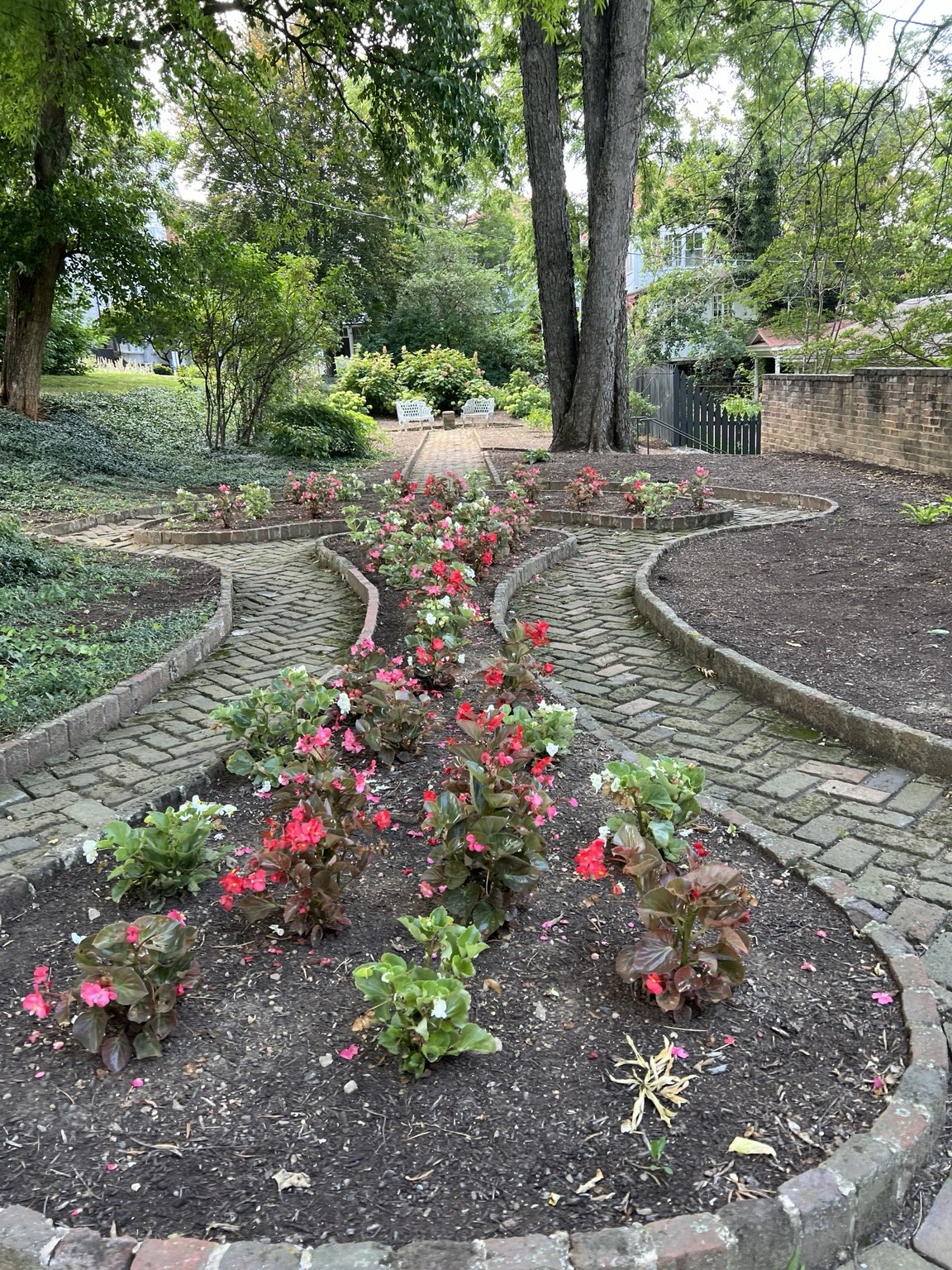
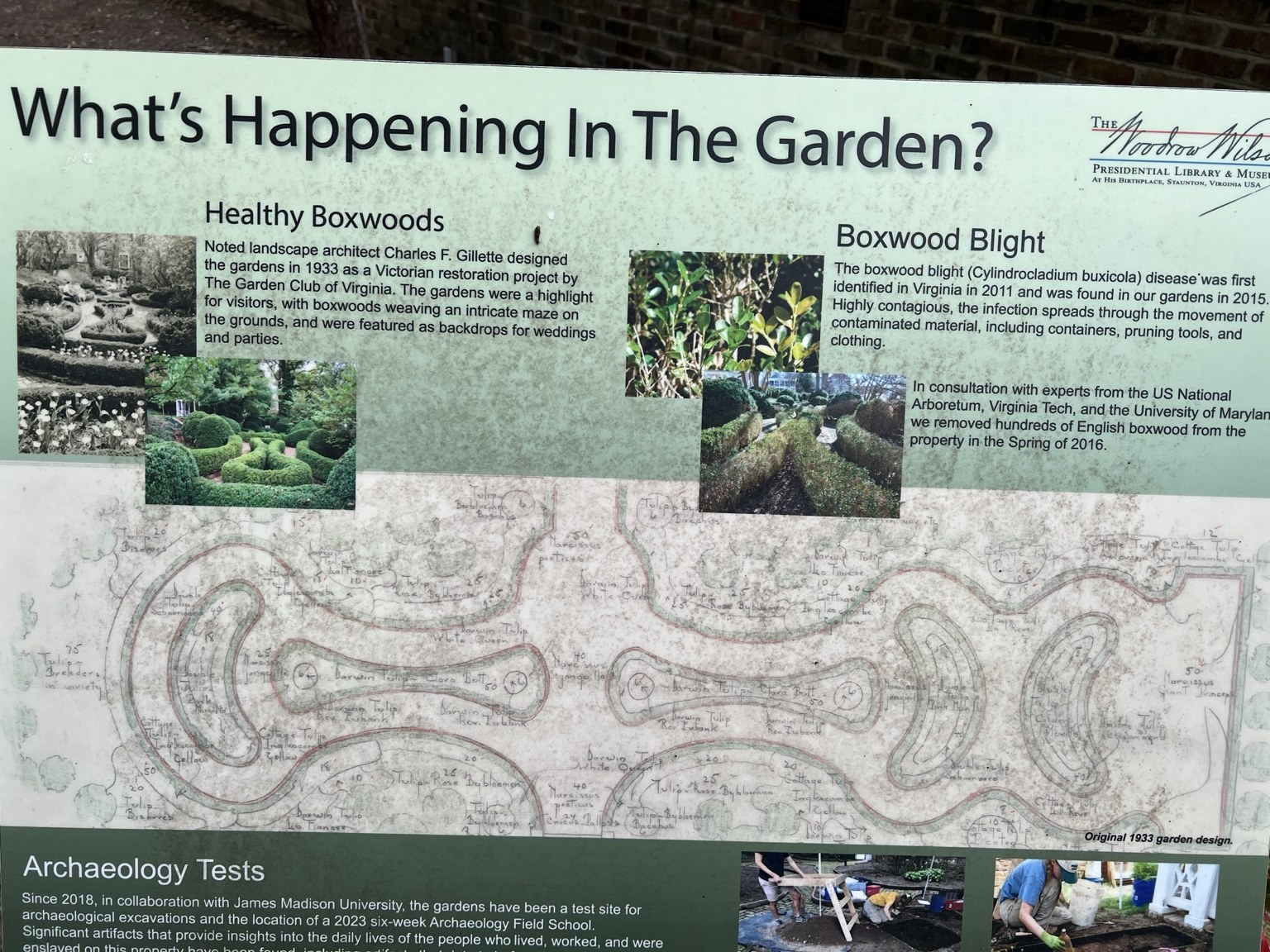
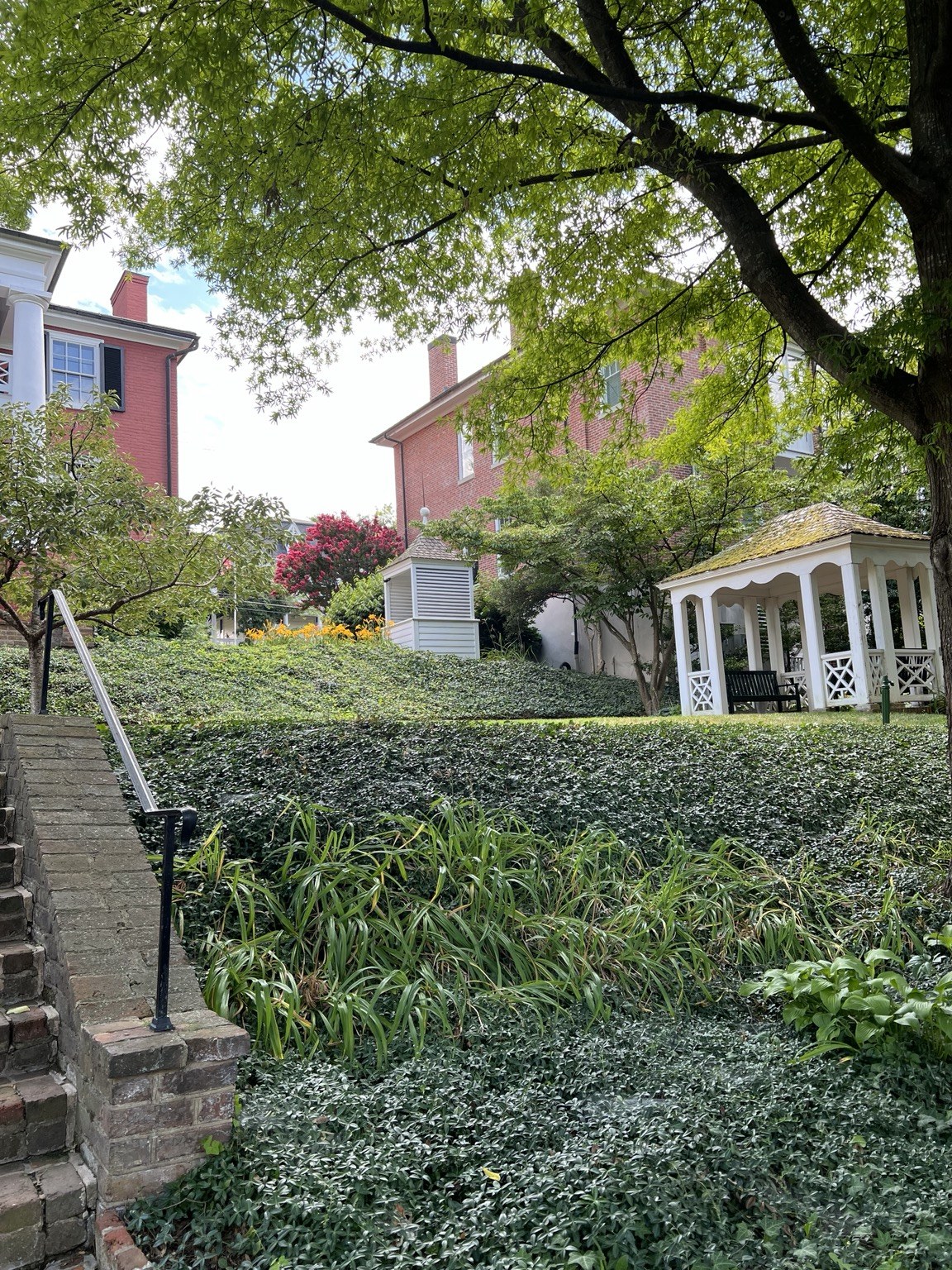
The garden behind the birthplace, between the museum and gift shop, was a pretty place to wander. It also looked more open—and felt smaller—than the older pictures suggested. An interpretive sign explained why.
Landscape architect Charles F. Gillette designed the formal garden in 1933 with intricate boxwood shapes. It later served as a backdrop for weddings and parties. Boxwood blight was found on the property in 2015, and hundreds of English boxwoods were removed in spring 2016. The old photographs and garden plan beside the present space make the missing pattern visible.
That history made the garden more interesting to me than a simple stroll would have been. It is still lovely, but it also carries a story of loss and an effort to understand what was here before. The museum describes archaeological work in the garden, including research into the people who lived and worked on the property. The 1933 formal design itself came long after Wilson's childhood here; it should not be mistaken for a garden he knew.
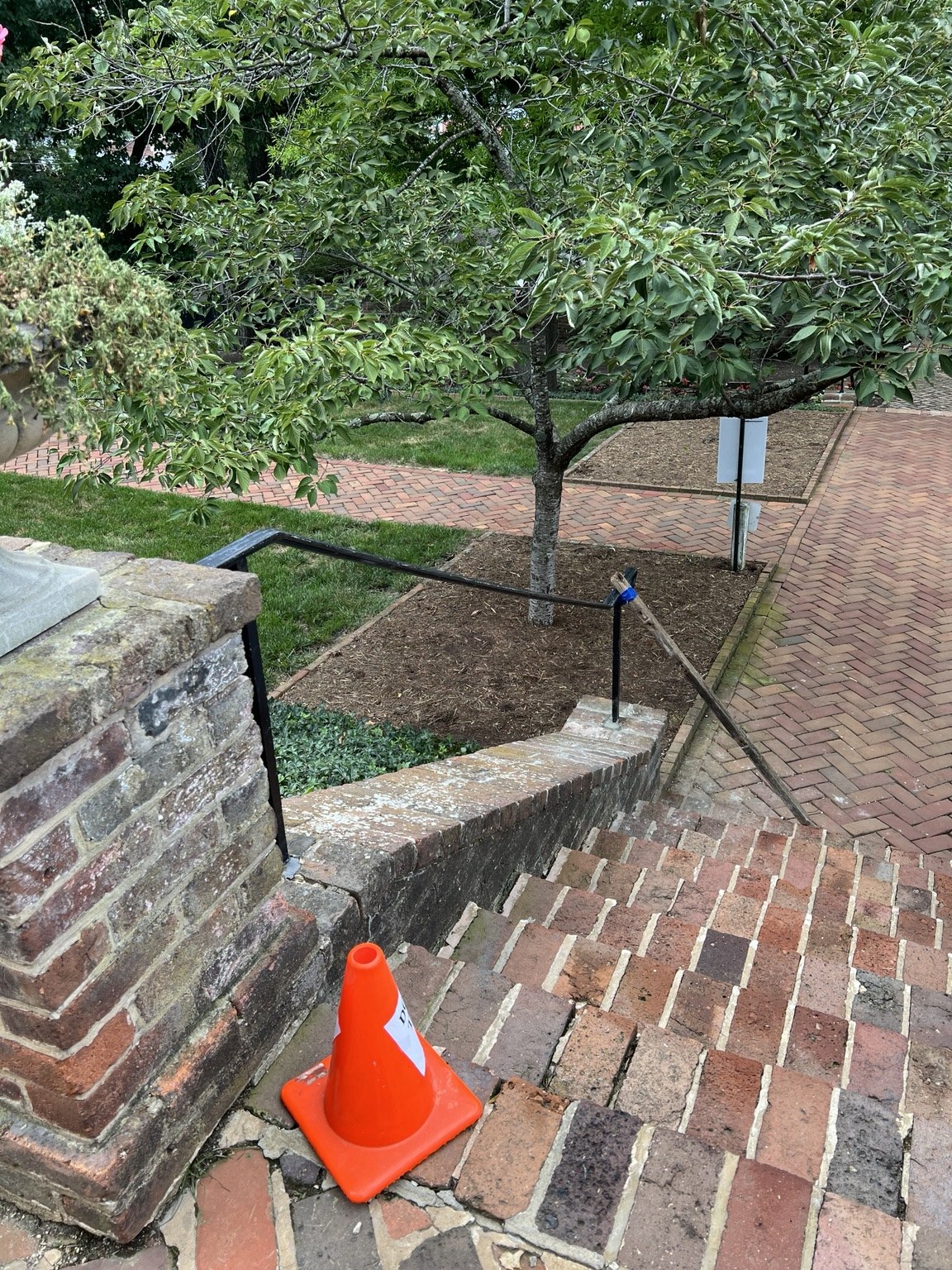
Some paving and steps around the grounds call for care. During our visit, orange cones marked partially blocked stair areas, including a visibly damaged brick edge. I would follow the marked route rather than assume every staircase is available. The garden paths also have uneven surfaces.
Why We Skipped the Birthplace Tour
General admission includes a guided tour of the birthplace house, but we only saw and photographed the exterior. The timing would have required roughly another half hour of waiting, and we could not linger that long. A guided group walking tour also asks for a kind of patience that our Littlest Wayfinder may not have had that day.
That is a choice about our family's timing, not a verdict on the house tour. I cannot review rooms we did not enter. Visitors who want the complete ticket experience should plan around a tour time rather than assuming the self-guided museum and guided house will line up effortlessly.
Littlest Wayfinder Report
The presidential car gave the Littlest Wayfinder something recognizable and exciting to investigate. The trench's sounds and vibrations did not seem to trouble him, though that will vary from child to child. The rest of the museum required frequent reminders that the fascinating things in front of him were for looking, not touching. We shortened those sections accordingly.
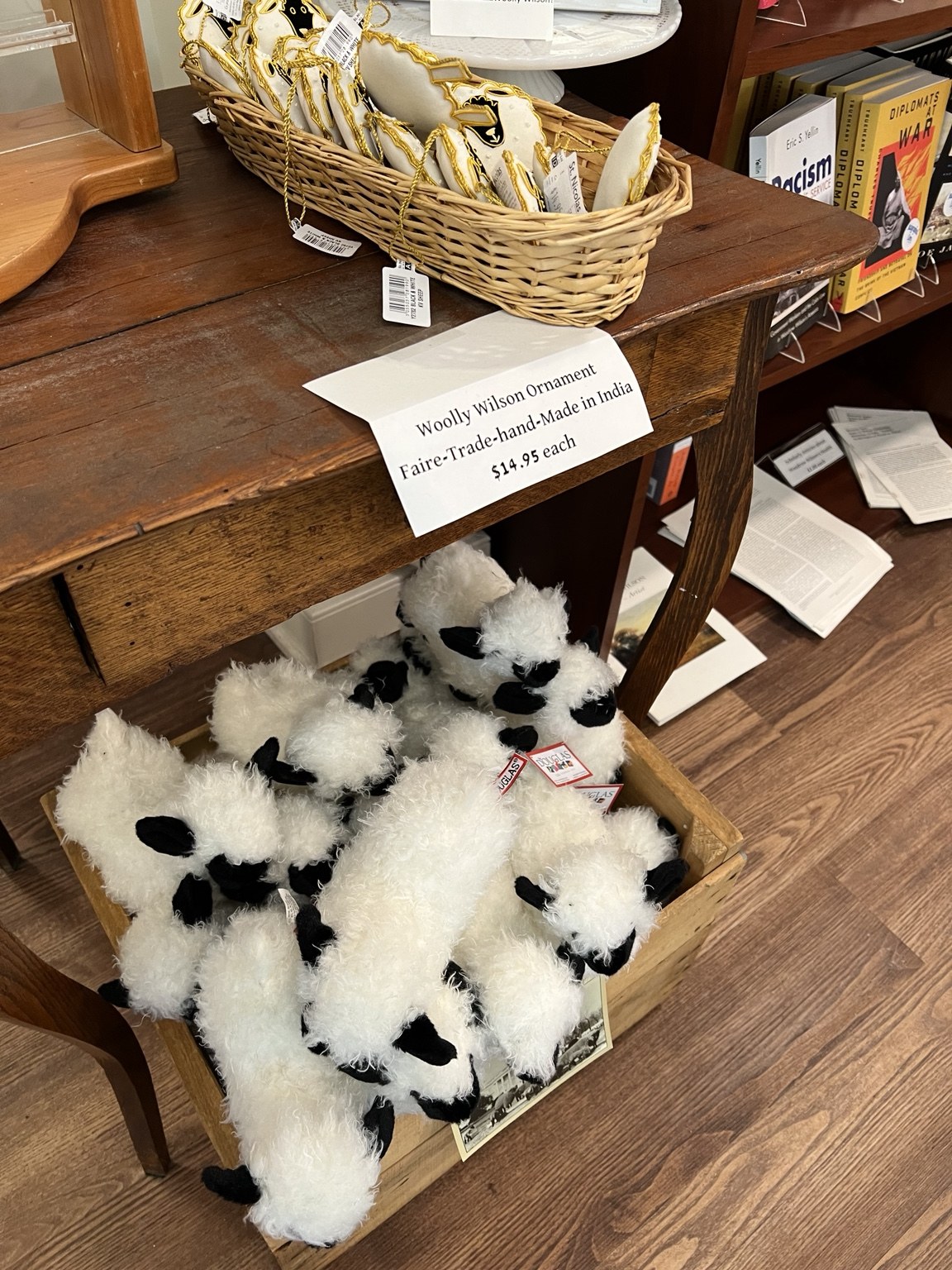
At the shop, history became considerably more negotiable. Wilson kept sheep on the White House lawn, a fact that helped the Littlest Wayfinder make his case for a plush sheep. A plane joined the deal. It was a memorable conclusion to a museum visit, even if the sheep had a more direct connection to the day's lesson.
Gift Shop Guide
The visitor center shop had a satisfying range of history books, products from local makers, and sheep-themed souvenirs. It felt worth browsing rather than simply passing through on the way out. We left with the sheep and plane; prices for those purchases were not recorded.
Restroom Review
The restrooms were clean, easy to locate, and conveniently placed at the beginning of our museum route. That is a small but genuine advantage when exploring with a young child. We did not assess changing facilities or detailed accessibility features.
Parking, Paths, and Practicalities
Parking was easy on our visit, and the campus was attractive. The site spreads across several buildings and garden areas, so expect outdoor walking as part of the experience. We saw cones at stair sections that appeared to need repair, and some garden paving was uneven. Those observations describe our visit; current access conditions should be checked with the museum if a particular route matters to you.
Cell Service: Not formally tested, so no carrier or signal score is assigned.
Was it Worth the Drive?
Yes. At the currently listed $20 per adult, a pleasant and informative museum outing does not have to deliver a perfect building or every available tour to feel worthwhile. We got a close look at a remarkable car, a trench exhibit that made history felt, thought-provoking displays on Wilson’s final years, a clothing exhibition I wanted more time with, and a garden whose story changed how I saw it.
Some areas could use repair, particularly the marked outdoor steps. We also left part of our ticket unused by skipping the guided birthplace tour. Neither erased the value of what we did experience. A family with a young child can enjoy the museum while accepting that the pace—and which sections get their full attention—may look different from an adult history buff's visit.
Pairs Well With
This stop fits naturally into a Staunton history day with the Frontier Culture Museum. The Wayward Wayfinders' Staunton depot and Wharf area, Woodrow Park, and a meal at the Depot Grill offer a change of pace after museum time. Check each destination's hours and allow travel time before combining them into one itinerary.
Know Before You Go
- The museum is self-guided; the birthplace house tour is guided and scheduled. Give yourself room in the day if you want both.
- Admission currently lists adults at $20 and children 5 and under as free. Check the official page for current rates and tour availability.
- The trench uses sound and floor vibration and includes war imagery. Consider your child's comfort with sensory effects.
- Historic objects in the galleries call for hands-off exploring; a young child's pace may shorten the visit.
- The garden is open to the public without museum admission, according to the museum, but paths may be uneven.
- On our visit, cones marked restricted portions of outdoor stairs. Check current accessibility information for a route that fits your party.
- Restrooms were clean and easy for us to find near the start of the museum.
Final Verdict
The Pierce-Arrow drew us in, the trench made the history tangible, and the clothing exhibition gave me a reason to wish for a little more unhurried time. Outside, the garden's missing boxwoods were not merely a disappointing change from an old photograph; their story became one of the most interesting parts of our visit.
The Littlest Wayfinder's preferred souvenir was a sheep, and we did not make it into the birthplace. It was still a good family outing and worth the admission. We would simply plan more time—or a different stage of youngling patience—if we wanted to take in the full guided tour next time.
Official Links
End of Destination Review · Wayward Wayfinders