Staunton, Virginia
Staunton Train Station and Historic Wharf District: Where the Magic of the Rails Lives
The Wayward Rating
An atmospheric Side Quest that becomes most memorable as part of a larger Staunton day.
Some places announce themselves with ticket booths, grand entrances, and signs telling you exactly where the experience begins.
Staunton’s Historic Wharf District is quieter about it.
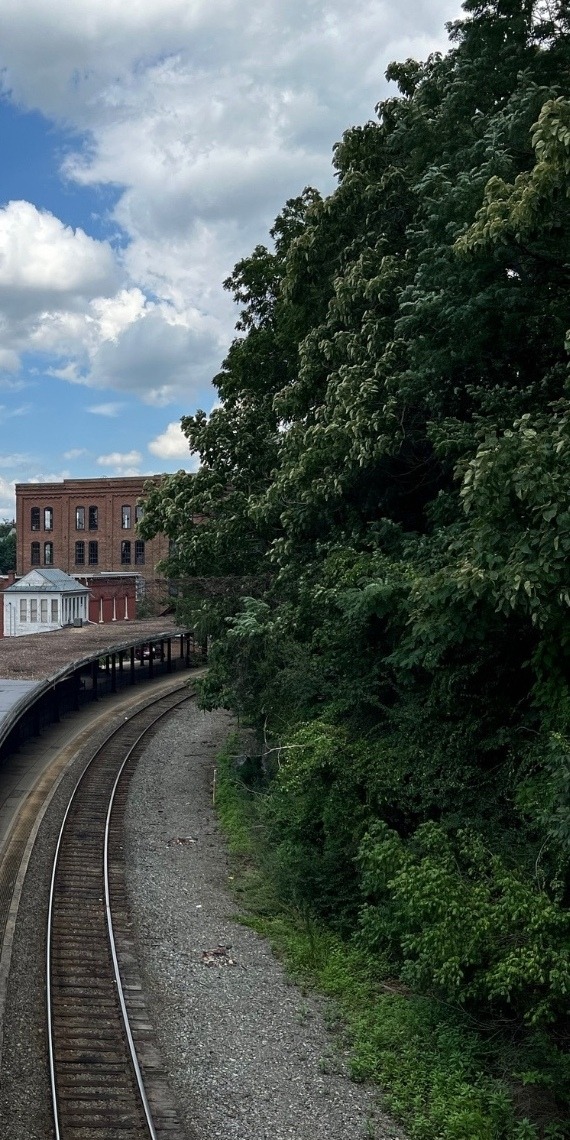
At first glance, you may think you have found an attractive train station surrounded by restaurants and old brick buildings. Slow down, start reading the historical markers, and follow the walkways, however, and the neighborhood begins revealing what it once was: a busy transportation and commercial center that helped shape Staunton.
This is not a traditional staffed attraction. There is no designated starting point, admission desk, or guide waiting to lead the way. Instead, the Wharf offers a free, self-guided walk through railroad history—provided you realize the experience is there.
Railroad History
The Road So Far
The Virginia Central Railroad reached Staunton in 1854, transforming the area surrounding the depot into a hub for travelers, merchants, farmers, wholesalers, and goods moving through the Shenandoah Valley.
Despite the name, there is no waterfront hiding behind the buildings. The district became known as the “Wharf” because it functioned as a shipping point. Workers used gangplanks to move merchandise between the trains and the warehouses lining the tracks.
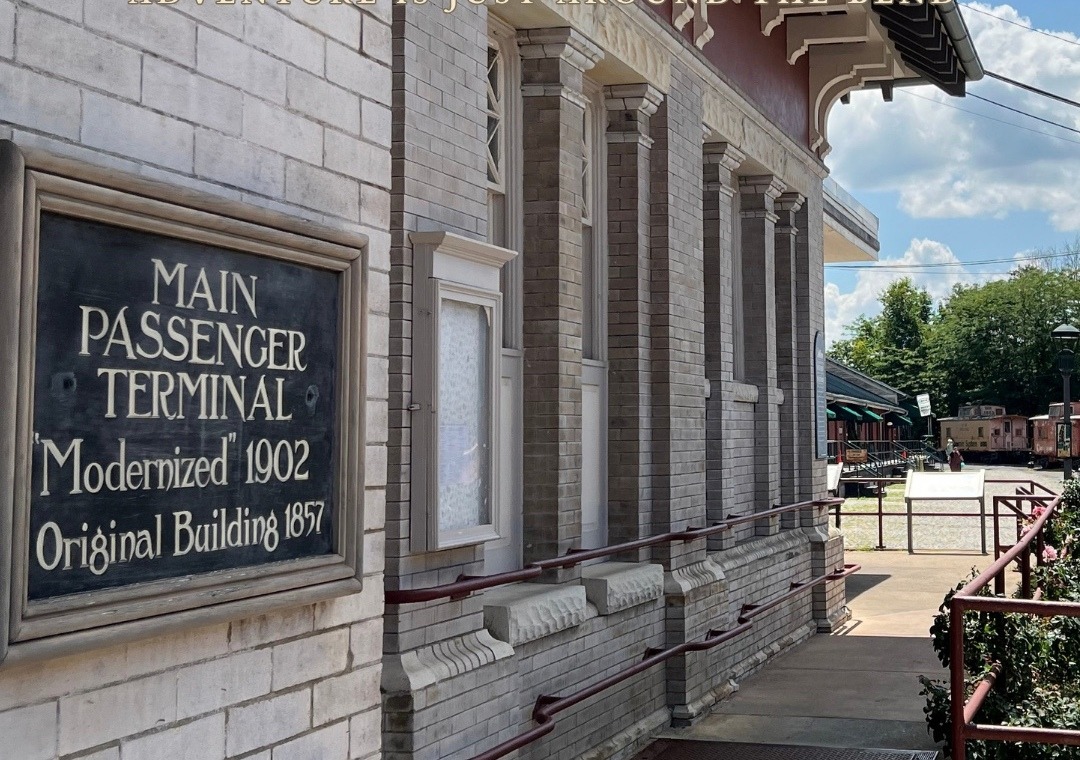
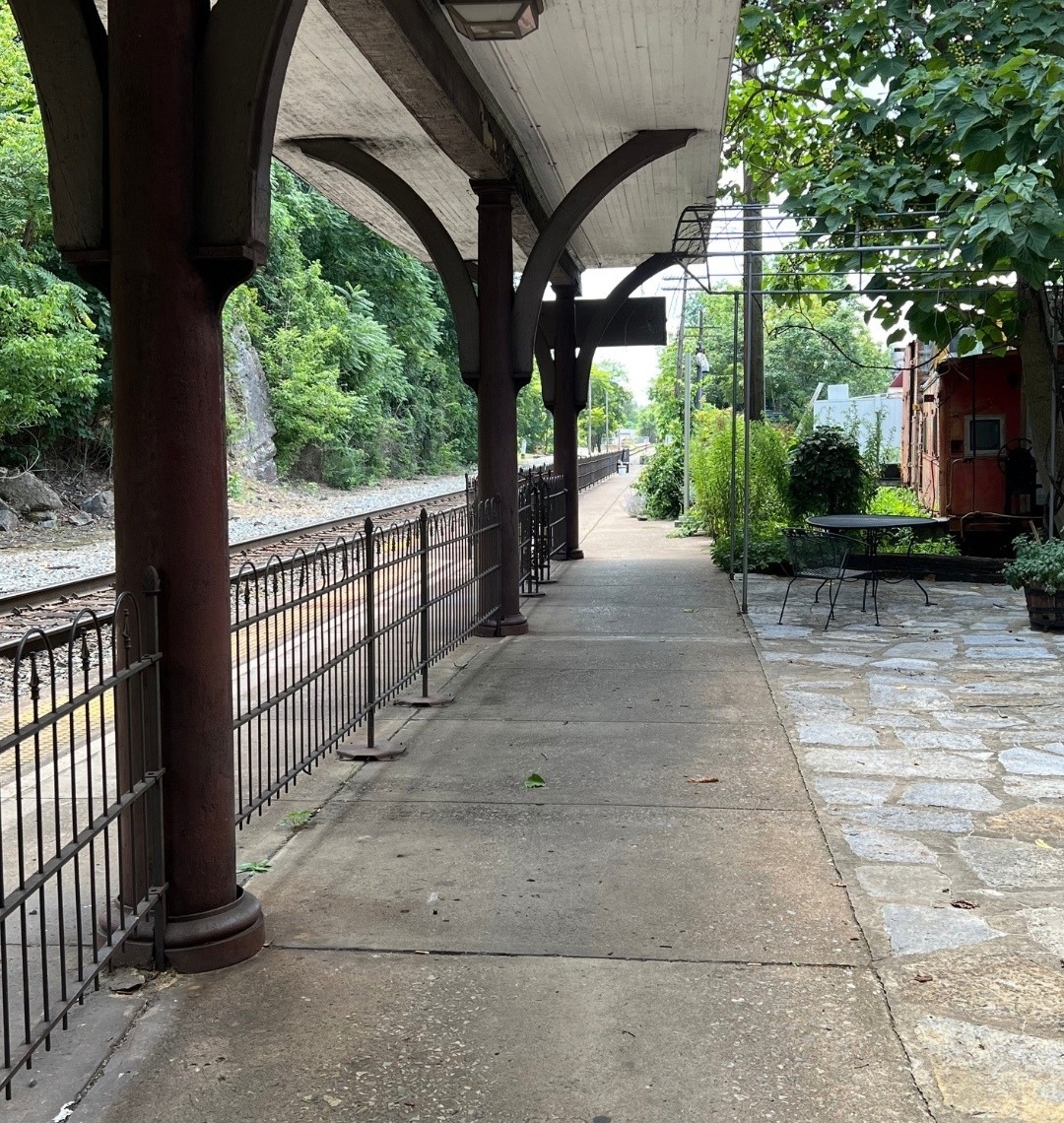
The surviving Chesapeake and Ohio station dates to 1902 and is the third depot built on the site. Its Bungalow-style design came from architect T.J. Collins, whose work appears throughout Staunton.
Across from the station, the old Wharf warehouses have found new lives as restaurants, shops, tasting rooms, offices, and other local businesses. The industry has changed, but the district still feels connected to the railroad that created it.
On Foot
Exploring the Station and Wharf
The pleasure here comes from wandering.
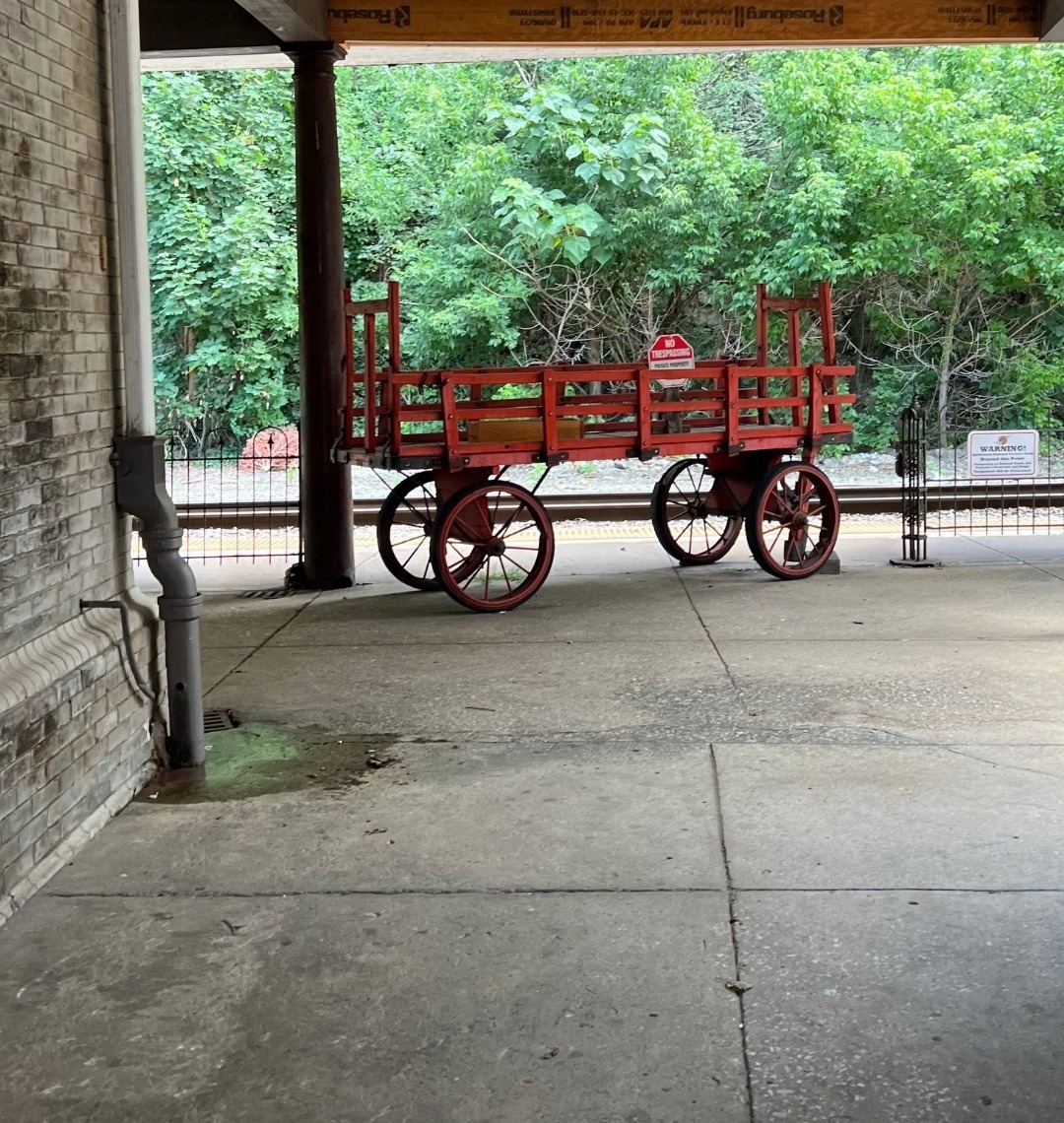
Historic signs positioned around the station and district explain what visitors are seeing, while the platform, tracks, old buildings, pedestrian bridge, and smaller architectural details create plenty to investigate.
The area manages to feel both historic and alive. This is not a preserved railroad scene sealed behind museum glass. It remains part of downtown Staunton, surrounded by active businesses and modern travelers.
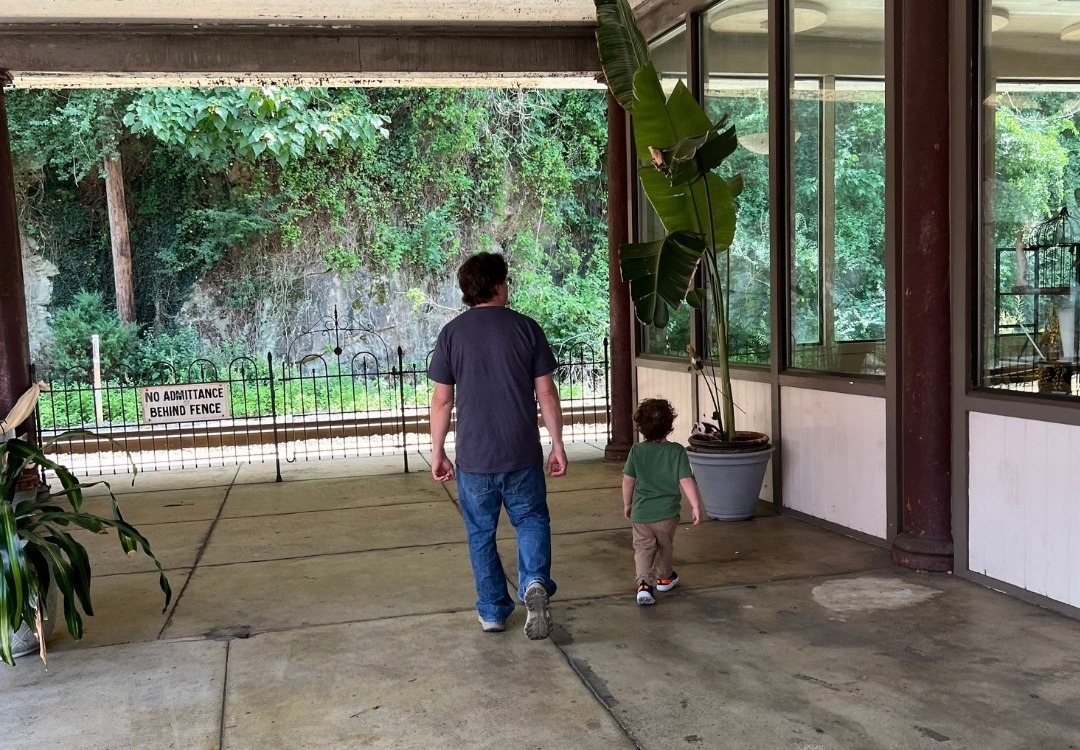
Our Littlest Wayfinder immediately understood that there was more to explore. He kept wanting to know what was at the top of the stairs near the station.
I was more hesitant.
At first, I had not noticed the signs explaining where the stairs led or confirming that they were part of the public route. Climbing an unidentified staircase beside railroad tracks and downtown businesses felt a little too much like accidentally wandering somewhere we did not belong.
Once we found the information, the mystery was solved: the stairs lead toward the Sears Hill pedestrian bridge and Woodrow Park, another worthwhile Staunton Side Quest with an elevated view over the tracks and downtown.
That connection adds considerably to the experience—but the route could be announced more clearly for visitors who do not already know it exists.
A Wayward Signature
Littlest Wayfinder Report
The Littlest Wayfinder enjoyed the freedom to explore and the sense that something new might be waiting around each corner.
There are tracks to watch, signs to investigate, walkways to follow, and stairs that practically demand the question, “What’s up there?”
This is not a children’s attraction with activities or exhibits designed specifically for young visitors. Its appeal comes from movement, discovery, and the excitement of being close to the railroad environment.
Children should remain closely supervised around the platform, stairs, streets, and active tracks.
Pair the Visit
Make It a Meal-and-Stroll Stop
The Wharf works especially well when paired with a meal.
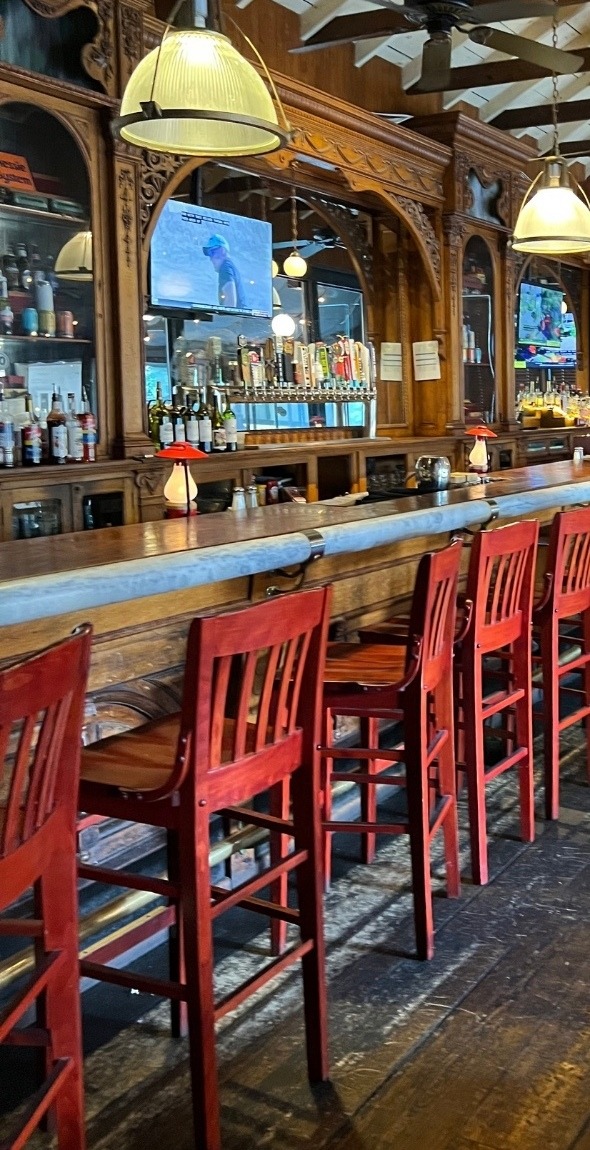
We parked beside Depot Grille because we were eating there, then explored the station and surrounding area as part of the same outing. The restaurant occupies part of the historic railroad complex and continues the train theme with vintage railcars and railroad details nearby.
And, importantly, the food was phenomenal.
Depot Grille makes the Wharf feel like a complete stop rather than a brief walk around a train platform. Eat first and explore afterward—or work up an appetite by walking the district before your meal.
The surrounding neighborhood also contains other locally owned restaurants and businesses, giving visitors several ways to build the Wharf into a larger downtown Staunton visit.
Annual Festival
When the Wharf Becomes Platform 9¾
Once a year, the station’s connection to magic becomes considerably less subtle.
Downtown Staunton hosts the annual Queen City Mischief & Magic Festival, a free, volunteer-run celebration inspired by magical stories, fantasy worlds, and multiple fandoms. The festival began with strong Harry Potter roots, and the historic train station remains one of its most fitting locations.
During the festival, Staunton Station becomes Platform 9¾.
Special guests and costumed characters have arrived aboard historic trains, with festivalgoers gathering along the platform to greet them. Scheduled arrivals, performances, character appearances, music, family amenities, and other activities near the station change from year to year, so visitors should consult the current festival schedule rather than relying on an older itinerary.
The broader downtown fills with themed activities, decorations, characters, food, performances, photo opportunities, and crowds of visitors wearing their wizarding best.
Seeing the Wharf on an ordinary day and seeing it during Mischief & Magic are two very different experiences. On a regular visit, the area offers a relaxed historical walk. During the festival, it becomes one of the most atmospheric pieces of Staunton’s transformation into a magical village.
Festival visitors should also expect altered traffic patterns, street closures, limited downtown parking, long restaurant lines, and significantly larger crowds.
Timing
How Much Time Should You Allow?
Allow approximately 45 to 60 minutes to explore the station, read the signs, and walk through the immediate Wharf area.
With a restaurant stop, plan for approximately one to two hours.
Visitors following a longer self-guided architectural tour, browsing nearby businesses, or continuing across the pedestrian bridge to Woodrow Park could easily extend the outing.
During Queen City Mischief & Magic, normal timing does not apply. Festival activities and crowds can turn this portion of downtown into a much longer experience.
Observed Conditions
Accessibility
The portions we explored were paved or used broad wooden platform and boardwalk-style surfaces. We also saw ramps that appeared to make much of the station area navigable for visitors using strollers or mobility devices.
Because we did not personally test every route for accessibility, we cannot promise that every section or transition will be equally manageable. Visitors with specific mobility concerns should review the route in advance.
The stairs toward Sears Hill are not the only way to enjoy the station and Wharf itself. The elevated Woodrow Park portion should be treated as an additional Side Quest rather than a required part of this experience.
Practical
Parking
Because we were eating at Depot Grille, we used parking beside the restaurant. Some spaces near Wharf businesses appear to be reserved for their customers, so visitors should pay close attention to posted signs rather than assuming every nearby space is general public parking.
Public options are available nearby, including the Wharf parking area, the Johnson Street parking garage, and time-limited downtown street parking. Construction, temporary closures, and parking rules can change, so check current city information before visiting.
Parking during Queen City Mischief & Magic requires additional planning. The festival publishes current parking, shuttle, street-closure, and accessibility information as the event approaches.
A Wayward Signature
Restroom Review
We did not encounter a clearly marked public restroom while exploring the outdoor station and Wharf area.
Depot Grille has restrooms for its customers, but visitors who are not eating at a surrounding business should plan accordingly. This is one of the limitations of visiting a self-guided historic district rather than a staffed attraction.
Additional temporary restrooms and family facilities may be provided during Mischief & Magic, but their locations can vary annually.
Untested
Cell Service
We did not specifically test or record cell service during this visit. The Wharf is located in downtown Staunton, but we will leave this category officially unscored rather than promise coverage we did not verify.
The Honest Read
What Holds It Back?
The Wharf’s greatest weakness is not the experience itself—it is how easy the experience is to overlook.
The historical signs provide useful information, but there is no prominent beginning that tells an unfamiliar visitor, “Start here. This is what you are about to explore.”
Without advance knowledge, someone could eat at a nearby restaurant, glance at the station, and leave without realizing that a self-guided historical walk surrounds them. The public stairs and connection to Sears Hill could also be explained more clearly at the point where visitors must decide whether to continue.
A small visitor kiosk, more visible route markers, or occasional staffed interpretation would elevate the Wharf considerably.
As it stands, the magic is present. Visitors simply have to know where to look.
Plan the Stop
Know Before You Go
- The station and outdoor historic district are free to explore.
- Allow 45–60 minutes without a meal.
- Allow one to two hours when pairing the walk with a restaurant.
- Read posted parking signs carefully; some spaces serve individual businesses.
- We did not find a clearly marked public restroom.
- The experience is self-guided, so downloading or collecting the architectural walking-tour information beforehand will help.
- Surfaces appeared largely paved, ramped, or boardwalk-style, but we did not test every route for mobility accessibility.
- Supervise children closely around streets, stairs, platforms, and active railroad tracks.
- Individual restaurants and businesses maintain their own operating hours.
- Queen City Mischief & Magic creates a completely different experience, with large crowds, activities, street closures, and special parking arrangements.
- Festival offerings at the station vary annually; always consult the current schedule before planning around a particular train arrival or character appearance.
Make a Day of It
Pairs Well With
Together, the Wharf and Woodrow Park create an especially satisfying combination: railroad history below and a view over the city and tracks from above.
- Sears Hill Pedestrian Bridge and Woodrow Park
- Depot Grille
- Woodrow Wilson Presidential Library and Museum
- Frontier Culture Museum
- American Shakespeare Center’s Blackfriars Playhouse
- Downtown Staunton’s shops and restaurants
- Queen City Mischief & Magic Festival
The Verdict
Was It Worth the Drive?
The Historic Wharf District would not be our sole reason for making a long drive to Staunton. It is best understood as an atmospheric Side Quest within a larger Staunton day.
Pair it with a meal, downtown shopping, a museum, a performance, or the walk across to Woodrow Park, and it becomes one of those unexpectedly memorable pieces that helps the entire day feel complete.
For railroad enthusiasts, architecture lovers, photographers, and families who enjoy unhurried exploration, it is well worth adding to the itinerary.
During Mischief & Magic, the answer changes. The station’s role as Platform 9¾ and the arrival point for special guests can make it a featured part of the festival rather than merely an accompanying Side Quest.
The Takeaway
Final Verdict
Staunton’s Train Station and Historic Wharf District is a free, flexible, and surprisingly rich meal-and-stroll stop.
It does not offer the exhibits, programming, or visitor services of a conventional railroad museum. What it offers instead is atmosphere: an old station beside active tracks, historic warehouses repurposed for modern life, stories tucked into signs, and stairways inviting curious visitors to find out what waits above.
Most days, it is an understated piece of Staunton history. During Queen City Mischief & Magic, the same station embraces its role as Platform 9¾ and becomes part of one of the city’s largest annual celebrations.
It is not quite a destination by itself—but it is precisely the kind of Side Quest that can become one of the most charming parts of a larger adventure.
Wayward Rating
Wayward Rating: 8.8/10
Best for: Railroad enthusiasts, history lovers, architecture fans, photographers, downtown explorers, festival visitors, and families looking for a free addition to a Staunton day.
Skip it if: You are expecting a staffed museum, hands-on exhibits, organized children’s activities, or a clearly marked attraction with visitor facilities.
Plan With Current Information
Official Planning Links
End of Side Quest · Wayward Wayfinders